


Choosing the right air dryer is an important part of building a reliable compressed air system. But how do you determine the correct air dryer capacity? Should it match the air compressor or depend on actual air consumption?
One customer recently asked:
"I'm still new to compressor. For dryer capacity, is it depend on the compressor/booster or depend on air usage?"

This is a common question, especially for first-time compressed air system buyers.
The answer is that air dryer sizing should start with the maximum airflow passing through the dryer, while actual operating conditions must also be considered.
Let's look at how to choose the right air dryer for your screw air compressor.
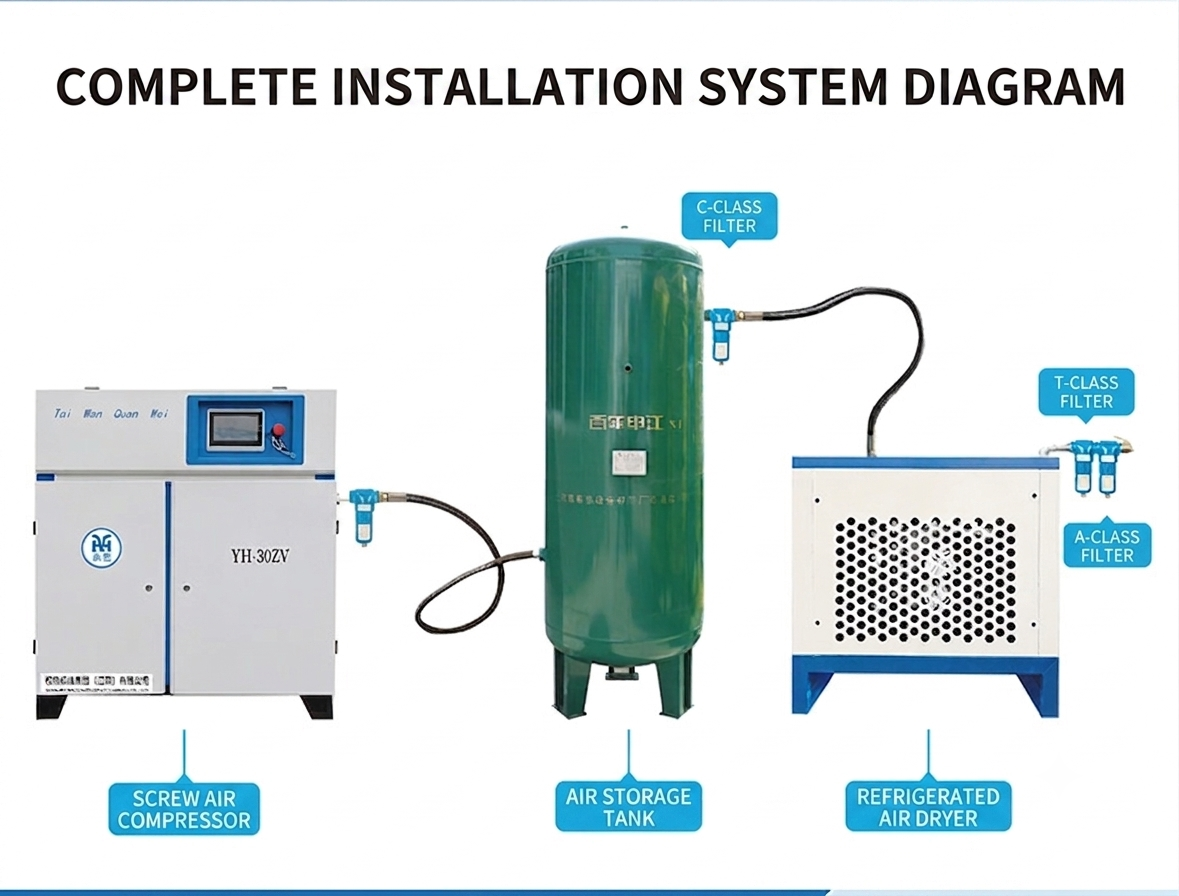
For a standard compressed air system, the compressor's Free Air Delivery (FAD) is usually the starting point for air dryer sizing.
For example, if a screw air compressor delivers 10 m³/min, the dryer should be selected to handle the required airflow under the actual operating conditions.
However, compressor power (kW) and airflow (m³/min) are different parameters. Two compressors with the same motor power may have different air delivery capacities.
Therefore, when selecting an air dryer, always check the compressor's rated FAD rather than choosing a dryer based on motor power alone.
Yes. Actual air consumption is important when designing a compressed air system, but average consumption should not be confused with maximum airflow.
For example:
Compressor rated airflow: 10 m³/min
Normal factory air consumption: 6–8 m³/min
If the compressor can deliver up to 10 m³/min, the dryer may need to handle the full compressor output, even if normal consumption is lower.
For systems with multiple compressors, varying demand or special flow-control arrangements, the maximum airflow through the dryer should be evaluated based on the system design.
The key is to size the dryer according to the maximum required airflow through it, not simply the average air consumption.
Besides airflow, several operating conditions affect the actual capacity of a compressed air dryer.
Working Pressure
The dryer must be suitable for the system's operating pressure. A standard 8-bar dryer cannot automatically be used in a 30-bar or 40-bar application.
Inlet Air Temperature
Higher compressed air inlet temperatures increase the drying load and may reduce the dryer's effective capacity.
Ambient Temperature
For refrigerated air dryers, high ambient temperatures can affect cooling performance and drying capacity.
Pressure Dew Point (PDP)
Pressure dew point indicates the required dryness of compressed air. General industrial applications commonly use refrigerated air dryers, while applications requiring much lower dew points may need desiccant air dryers.
Manufacturers provide correction factors to account for differences between actual operating conditions and rated conditions. Always check these factors before confirming the dryer model.
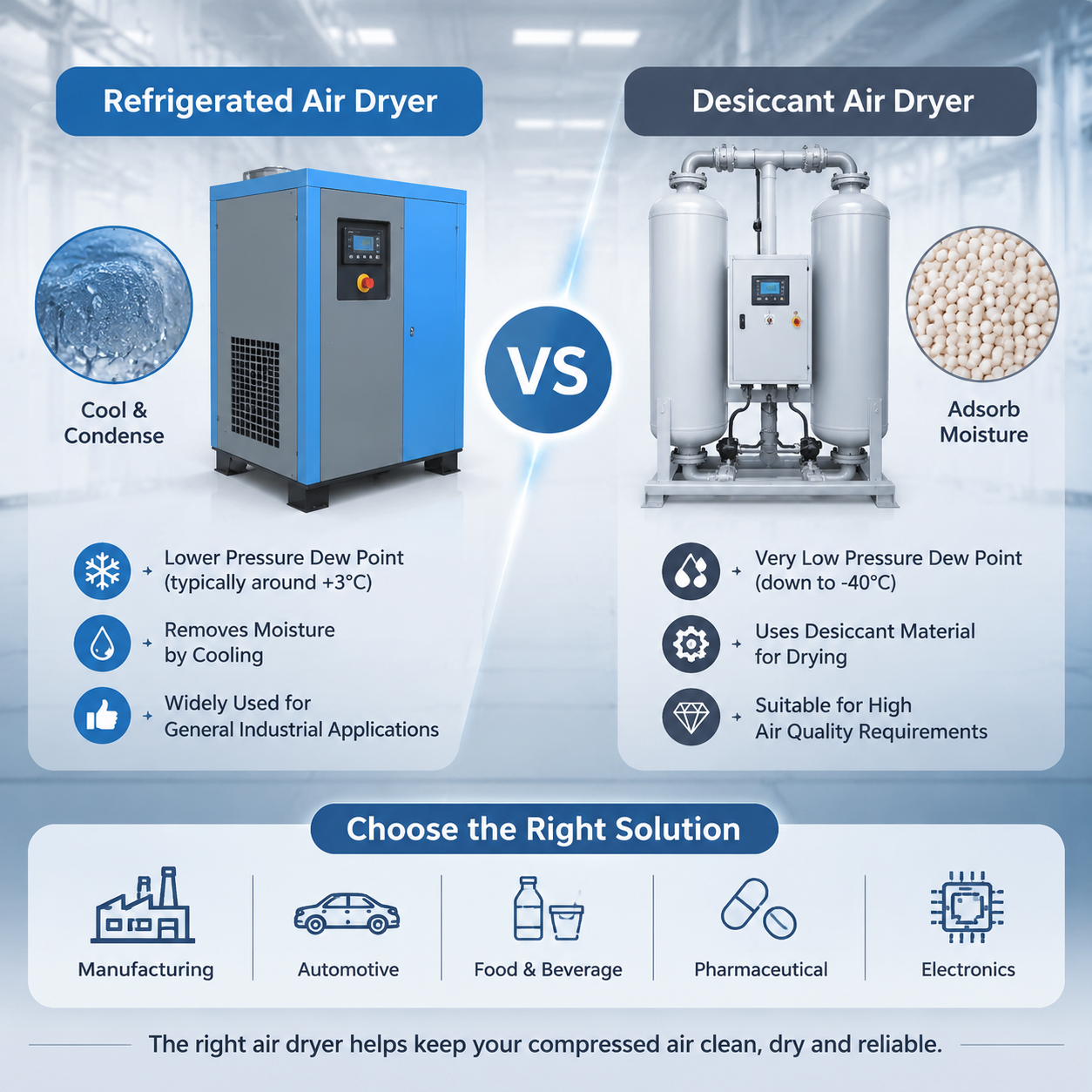
Which type of air dryer should you choose?
Refrigerated Air Dryer
A refrigerated air dryer cools compressed air to condense and remove moisture. It is commonly used in general manufacturing, workshops and pneumatic applications.
Desiccant Air Dryer
A desiccant air dryer uses adsorbent materials to remove moisture and achieve a lower pressure dew point. It is suitable for applications requiring very dry compressed air.
The right choice depends on your required air quality and application, not simply the compressor size.
Here are some common mistakes to avoid:
Selecting a dryer based only on compressor motor power.
Choosing capacity according to average air consumption without checking peak airflow.
Ignoring working pressure and inlet air temperature.
Overlooking ambient temperature and manufacturer correction factors.
Choosing a dryer without confirming the required pressure dew point.
If a booster is included, also consider its position in the system. A dryer installed before the booster is selected according to the conditions on the compressor side, while a dryer installed after it must match the booster discharge conditions.
Before requesting an air dryer quotation, prepare the following information:
| Parameter | Example |
|---|---|
| Airflow (FAD) | 10 m³/min |
| Working pressure | 8 bar |
| Inlet air temperature | 35°C |
| Ambient temperature | 30°C |
| Required pressure dew point | +3°C |
| Power supply | 380V / 50Hz / 3Ph |
| Application | General industrial use |
Providing these details helps suppliers evaluate the required dryer capacity and recommend a suitable model.
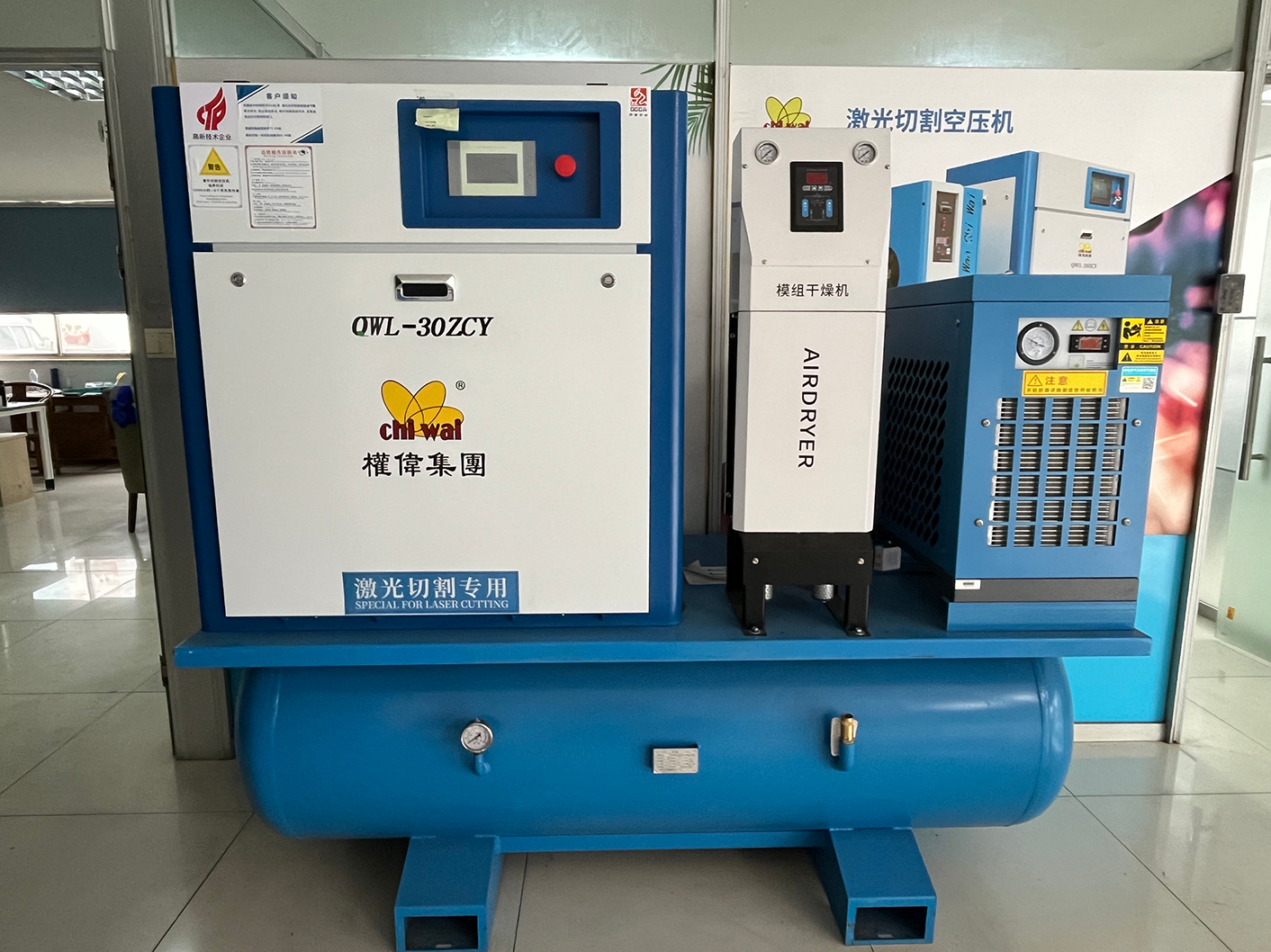
Skid-mounted screw air compressor for laser cutting machine.
Assembled with refrigerated dryer and modular dryer(dessicant dryer).
Q1: Should an air dryer have the same capacity as the air compressor?
Not necessarily. The dryer's rated capacity must be checked against the maximum required airflow and actual operating conditions. Correction factors may affect the final model selection.
Q2: Can I select an air dryer based on actual air consumption?
Actual consumption is important, but peak airflow through the dryer must also be considered. Average consumption alone may result in an undersized dryer.
Q3: Does a higher working pressure require a different air dryer?
Yes. The dryer must be designed for the intended operating pressure. High-pressure applications may require specially designed dryers.
Q4: Which is better, a refrigerated or desiccant air dryer?
Neither is universally better. A refrigerated dryer is suitable for many general industrial applications, while a desiccant dryer is used when a lower pressure dew point is required.
Selecting the right air dryer is not just about matching its capacity to the compressor's motor power or the factory's average air consumption.
Start with the compressor's airflow, determine the maximum flow through the dryer, and consider working pressure, temperature and required pressure dew point.
A properly selected air dryer helps maintain compressed air quality, protect downstream equipment and support reliable production.
Looking for a suitable air dryer for your screw air compressor? Contact Quanwei Machinery for professional equipment selection and compressed air solutions.
Daftarkan buletin kami untuk mendapatkan informasi terkini, promosi dan wawasan.

 Jaringan IPv6 didukung

